sábado, 13 de enero de 2018

The Next Wave of Job Opportunities, Brought to You by the IoT (Part 1 of 4)

eferemail
shared this article with you from Inoreader

This article is the first of a four-part series that will look at the IoT's impact on the following:

  • Labor and jobs
  • Privacy and security
  • Energy efficiency
  • Sports and health

The numbers are impressive for the Internet of Things (IoT):

IHS forecasts that the IoT market will grow from an installed base of 15.4 billion devices in 2015 to 30.7 billion devices in 2020 and 75.4 billion in 2025 — an increase of 60 billion devices over 10 years. (Source: IoT platforms: enabling the Internet of Things, March 2016)

Bain predicts that by 2020, annual revenues could exceed $470 billion for IoT vendors selling hardware, software and comprehensive solutions. (Source: Bain & Company, How Providers Can Succeed in the Internet of Things, August 2016)

As the IoT pushes automation to new heights, people will perform fewer and fewer "simple tasks." Does that mean the demand for highly technical employees will increase as the need for less-technical employees decreases? What will be the immediate and long-term effects on the overall job market? Let's take a look how the IoT will impact jobs and the labor market.

The obvious: Immediate, in-demand jobs and skills include high tech and data analytics

Millions of devices will come online over the next few years, and a considerable number of applications will emerge. It's no surprise that tech companies — as well as large global companies across many industries — are busy creating IoT strategies to capitalize on this trend.

Yet many of these companies don't have the know-how or in-house talent to realize their new IoT strategies. This is good news for the job market. So let's start with the obvious skills and jobs that will be in high demand over the next 5-10 years, thanks to the Internet of Things:

  • Circuit designers, microcontroller programmers, hardware designers, statisticians, app developers, network security developers and electrical installation engineers, as companies strive to implement IoT strategies.
  • Employees who can offer data analytics skills and vulnerability analysis, to gather and extrapolate data to improve applications and enhance security, as well as for reporting to executives and investors.
  • New ways of gathering data based on newly connected data points, along with algorithm development for improved machine learning so that all those newly connected machines can now teach and learn from each other. People with these skills won't have trouble finding work in the IoT age.

The not-so-obvious: Ushering in the next Industrial Revolution

The IoT has the potential to affect the overall job market, as well as our lives, to a degree not felt since the Industrial Revolution and the rise of assembly-line production. The IoT's network of connected devices will eventually take on many of the repetitive, drudge work tasks of today. The downside? Some of the people currently doing those tedious tasks will lose their jobs.

But it's important to note that, to date, overall employment hasn't appeared to decrease, despite considerable pessimism about the loss of jobs to automation. Clearly, change is very painful for those impacted. But overall, where jobs are lost, other jobs are created. And by economic law, jobs with low value-add disappear and are replaced with jobs with high value-add. This is the "cleaning mechanism" through which economic growth and wealth creation are affected.

The spinning wheel: How automation can create new employment

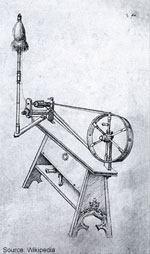
Spinning WheelTo see how this cleaning mechanism works, let's revisit an example from the distant past.

In 1412, the city council of Cologne, Germany, prohibited a local craftsman from producing a spinning wheel because it feared unemployment among textile manufacturers that used the hand spindle. The new spinning wheel enabled one worker to produce the amount of yarn previously produced by 200 workers.

Nevertheless, this technological progress didn't create a long-term rise in unemployment. Why? Two reasons:

  • The new machine created new jobs in the "technology sector" (e.g., the production of the machines).
  • The falling price of textiles allowed consumers to buy more textiles and other goods, thus creating job growth in many sectors of the economy.

The spinning wheel is just one example of how predictions of technology-induced long-term unemployment have been proven wrong.

It's also crucial to identify a common but incorrect assumption — that the amount and composition of work in the economy is fixed. Jobs may become mechanized and automated, but new employment opportunities also arise. (In the early 20th century, few would have predicted that today, employment in banks, hospitals or the entertainment industry would exceed employment of the entire agricultural sector!)

The next Enlightenment: Enabling new ventures

It's also important to look at the bigger picture. When machines do the grunt work, humans are able to solve bigger problems or spend their time in more interesting ways. This shift may well enable the next level of creative culture — the next space race, or a new Enlightenment, perhaps?

The post The Next Wave of Job Opportunities, Brought to You by the IoT (Part 1 of 4) appeared first on Electronics For You.

View on the web
Inoreader is a light and fast RSS Reader. Follow us on Twitter and Facebook.

Simple 8-bit Computer for Learning

eferemail
shared this article with you from Inoreader

Computers take an input, process it as per a set of instructions and provide the output. These are general-purpose devices that can be programmed to carry out a set of arithmetic or logical operations automatically.

Intel 8008 was the first 8-bit microprocessor for the microcomputer system. The architecture of a microprocessor seems complex, but a computer can be entirely built with TTL logic chips without using any microprocessor/controller. This project helps you build your own computer while also providing an insight into the working of a general-purpose microprocessor as well as its construction mechanism.

Architecture

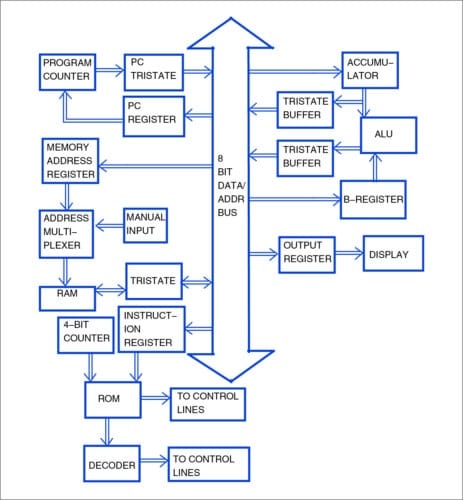
This 8-bit digital TTL computer is designed as per the architecture shown in Fig. 1. The entire processor circuit is powered from an SMPS as it consumes a lot of power. Voltage supply is 5V.

Processor architecture

Fig. 1: Processor architecture

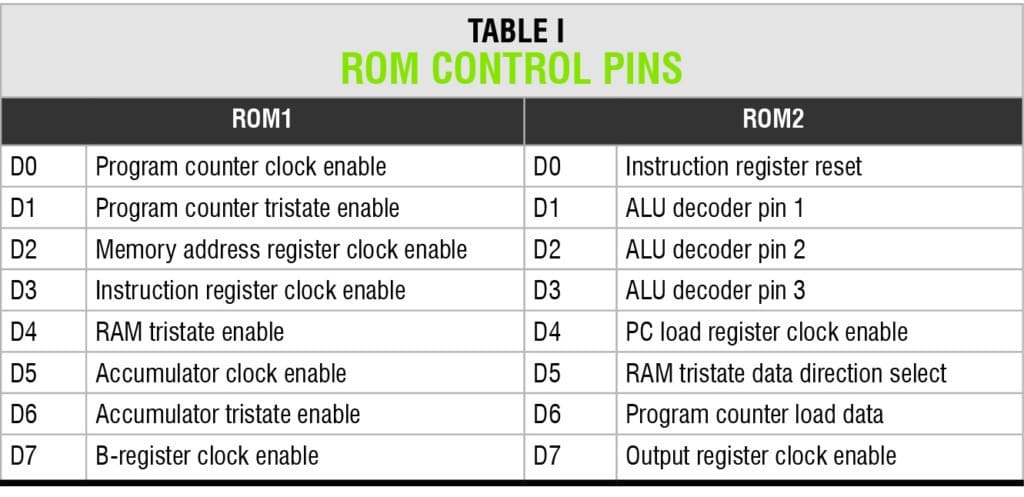
The architecture has a common 8-bit bidirectional data/address bus. The arithmetic logic unit (ALU) consists of adder/subtractor circuit along with AND, OR, NOT and XOR gates to perform logical and arithmetical operations. The values for operation are stored in A-register (Accumulator) and B-register. The number of states and sequence of states for all the instructions are stored in the ROM. Two ROMs are used to control the sequence of operation for various modules in the system. ROMs provide 16 control lines for operation.
The output and enabling of different modules are controlled by EN pins of ICs or tristate buffers. For example, the ALU output is controlled by using tristate buffer at the end of each logic output. The ALU output selection based on the instruction is done by a decoder connected to ROM2 as shown in the circuit diagram Fig. 2.

Circuit of simple 8-bit computer

Fig. 2: Circuit of simple 8-bit computer

Typically, the sequence of operation is as follows:
1. The program counter (PC) is incremented
2. The PC value is loaded in the memory address register
3. The instruction is stored in the instruction register of the RAM at the address specified by the memory address register
4. The PC is incremented
5. The memory address register is updated with a new PC value
6. The LDI instruction loads the data in the accumulator specified by the memory address of the RAM
7. The instruction register is cleared for next instruction loading

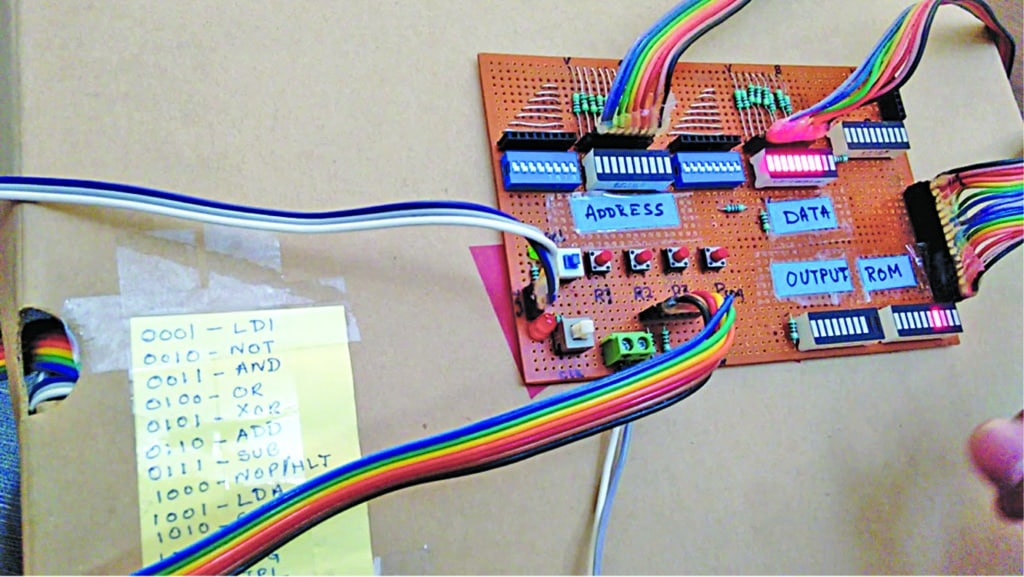
The author's prototype with five LED bar displays is shown in Fig. 3. LED bar displays show the status of output, data, address, instruction set and state. This helps in tracking how each instruction is being executed.

Fig. 3: Author's prototype

Circuit and working

As can be seen from Fig. 2, inputs to the accumulator, B-register, output register, PC register and memory address register are fed through the 8-bit parallel address/data bus. The input to the ALU is provided by the accumulator and B-register.

The ALU outputs to the bus via tristate buffers. The accumulator also outputs to the bus via tristate buffer 74LS245N. The tristate buffers are controlled by enable (G) pin.

The PC register output is fed to the program counter, providing the value to be loaded in the counter. The PC outputs to the bus via a tristate buffer. The memory address register outputs to the multiplexer.

The multiplexer output is fed to address pins of the RAM (CY6264). Input/output pins of the RAM are connected to the bus via the tristate buffer (IC23). The DIR and G pins of the tristate buffer are controlled based on the instruction and data flow. The 4-bit LSB of the bus is fed to the instruction register (74LS173N).

The inputs to the counter (CD4029N) are grounded. The outputs of the instruction register and the counter are connected to the address pins of ROMs (AT28C64). The ROM outputs are connected to enable pins of various ICs to control the data flow based on the state and instruction.

The functions of different modules in the architecture are as follows:

Program counter.

The program counter provides the computer with the current address of the instruction to be executed.

Memory address register.

The memory address register (MAR) stores the current address for the byte to be read or written from the memory.

Multiplexer.

The multiplexer allows selection of address either from the MAR (in run mode) or the manual input (programming mode).

Instruction register.

The instruction register of a computer stores the current instruction that is being executed.

During the computer's operation, the value stored in instruction register is the instruction opcode. It forms the four bits of middle-value address (A4-A7) for ROMs. The counter for the next state provides the four bits of LSB (A0-A3) for ROMs. The 3-bit output from the comparator (74LS85N) forms the MSB (A8-A10). Thus, the address (A0-A10) is fed to the two ROMs to generate the control logic for different modules.

The post Simple 8-bit Computer for Learning appeared first on Electronics For You.

View on the web
Inoreader is a light and fast RSS Reader. Follow us on Twitter and Facebook.

The Impact of Innovation on our Lives in 2018

eferemail
shared this article with you from Inoreader

One of the benefits of my role as President and CEO of Analog Devices, is traveling the world to meet with customers from a variety of industries and regions and hearing their perspective on the technological, business, and market challenges they face. Our customers produce the wide variety of electronic equipment that we all rely on for transportation, healthcare, communication, and many of the benefits of modern life. Our discussions typically focus on both their current needs to intelligently bridge the physical and digital worlds as well as on the innovation they want to enable in the future. I have drawn upon those conversations and other research to compile the following five technology macro-trends that I believe will have the greatest impact on business and society during 2018.

Artificial intelligence

Customers in every market segment are feverishly trying to understand the value of artificial intelligence and machine learning for their businesses, mirroring efforts of a decade ago to realize the benefits of digitalization. The focus on utilizing AI will accelerate in 2018, with the performance/affordability barrier continuing to be broken down and targeted applications of AI achieving financial and application-level impact in Industrial settings. For example, AI has progressed to a point where, industrial robots are able to learn and adapt to new environments or unfamiliar objects without being specifically trained.

AI at the edge will begin transitioning from a novelty to a norm through innovation related to low-power processing, while intelligent edge computing will become a reality with context-enriched data and information driving smarter system partitioning between the edge and the Cloud.

Meanwhile the development of AI applications that rival human intelligence will remain squarely in the university research domain.

Autonomous/intelligent machines

Autonomous systems for cars, drones, and robots will continue to advance during 2018, but only to a certain point due to unresolved regulatory and technical issues. Nevertheless, over the coming months, we will continue to see progress in the adoption of autonomous systems through initiatives such as trial deployments of robo-taxis in limited areas. In particular, long-haul transportation such as trucking, and trains will be among the applications that experience true advancement of autonomous functionality in the near term.

Driven by the continuing quest for productivity gains, the drive to add intelligence to machines will also accelerate factory automation/Industry 4.0 initiatives. For example, advances in machine learning will significantly improve the ability of systems to provide valuable performance recommendations and predictions based on their own independent condition monitoring.

Ubiquitous wireless sensing networks and data

The combination of advanced materials, enhanced functionality, and MEMS is enabling breakthroughs in sensor form factors and cost, which will enable ubiquitous wireless sensor networks. Deployment of wireless mesh networking in IoT and Industrial applications will enable sensing capability to be added to existing systems without extensive rewiring.

However, end-to-end security from the sensor to the Cloud will be the gating requirement for Industrial customers to begin deploying Industrial IoT initiatives at scale.

The drive to make products and systems more intelligent will also increase the need to manage and analyze an ever-increasing flow of data. Data centers will require higher processing performance as the data load continues to increase, as well as advanced power management innovation to mitigate risk presented by high thermal levels in data center systems. We will also begin to see greater intelligence integrated at the edge node to begin to triage and tame the flow of data.

Machine-human interface

Mixed reality systems will continue to emerge and grow in popularity, with augmented reality and virtual reality ecosystems flourishing and stimulating innovation. As the use of commercial AR/VR systems accelerates, costs will decrease, and applicability will extend into spaces such as Industrial for off-site diagnostics and repair.

In addition, voice-as-user interface has now become an expectation, but this technology continues to face limitations, especially in noisy environments. Gartner predicts that in 2018, 30% of our interactions with technology will be through "conversations" with smart machines, meaning that technology and service providers need to invest now to improve currently limited voice interfaces.

Heterogeneous manufacturing

With the costs of deep-submicron development skyrocketing and Moore's Law facing increasing technology and economic headwinds, heterogeneous integration of multiple technologies in a package, on a laminate, or even on a single silicon substrate will increase. New business models will emerge to capitalize on heterogeneous manufacturing, enabling recombinant innovation for small-scale semiconductor industry players who cannot afford to invest in state-of-the art IC lithographies. For suppliers with greater scope and scale, the addition of signal processing algorithms to silicon will increase the value of their solutions.

Conclusion

How will these trends evolve over the coming year? It is often said that the best way to predict the future is to create it. As semiconductor innovation will be the foundation for many of these emerging applications and analog technology will become even more critical in a data-hungry world, you can be sure that we at Analog Devices will be working diligently to make these predictions a reality in 2018.


The post The Impact of Innovation on our Lives in 2018 appeared first on Electronics For You.

View on the web
Inoreader is a light and fast RSS Reader. Follow us on Twitter and Facebook.

sábado, 16 de diciembre de 2017

Tiempos difíciles: ¿cómo superarlos?

eferemail
shared this article with you from Inoreader
Vía GurusBlog


Gustavo Rivero. Los tiempos difíciles no duran. Las personas duras, sí. En el mundo de los negocios y en la vida en general, es inevitable que experimentemos tiempos difíciles y que tengamos que ser duros en algún momento, lo más importante es cómo los abordamos. Según Lolly Daskal, hay aspectos que necesitamos saber en cuanto a lo que hacemos y pensamos cuando estas situaciones nos golpean con fuerza.

En primer lugar, debemos mantener las cosas en perspectiva: cuando los tiempos son difíciles es fácil intentar apartar nuestros problemas y perder la perspectiva de la realidad. A veces porque permitimos que nuestros problemas se agranden, nos atemorizamos y nos paralizamos al tomar decisiones o al hacer cambios que ayuden a mejorar la situación. Tenga cuidado de no dejar que el miedo le impida hacer lo que debe. Reconozca su miedo y lidie con él. Concéntrese en lo que puede hacer y preste atención para hacer pequeñas tareas diarias. Haga sólo las que tocan, aunque sean pequeñas, no piense en el futuro, sólo piense en este momento y nada más, sucederá lo siguiente si realiza pequeñas acciones ahora.

Preocuparse no elimina los problemas del mañana, quita la paz de hoy. Sólo porque tenga miedo no significa que no pueda ser valiente, sólo porque ahora sea difícil no quiere decir que no pueda ser fuerte, sólo porque piense que puede fallar no significa que no lo haga. Ahora es el momento de mirar más allá de sus miedos y de sus propias dudas, y de seguir moviéndose más allá de la preocupación, y de enfrentarse a sí mismo y a sus miedos más profundos, ahora es el momento de no darse por vencido. Su mente es su peor enemigo. Usted es más valiente de lo que cree, más fuerte de lo que parece, más inteligente de lo que considera, y mucho más capaz de lo que imagina.

La experiencia lo fortalecerá: es uno de los maestros más valiosos que puede tener. Nadie más tiene las mismas experiencias que usted, son lo que le hace único. Las nuevas experiencias le ayudan a crecer. A veces pueden ser difíciles, pero lo que no nos destruye nos hace más fuertes y esto nos hace tener más confianza en el futuro. Recordemos lo comentado en los artículos "Los ganadores fracasan hasta que ganan" y "Resiliencia: ¡hay que soportar sin dejar de avanzar!".

Mantenga pensamientos positivos en una mente negativa. Cuando las cosas son difíciles necesita aprender a proteger su mente, no puede permitir que se descontrole y se vuelva negativa. Es tan fácil ir allí, permanecer allí y no salir de allí… Si no tiene cuidado, sus pensamientos negativos sólo pueden llevarlo a lugares aún más negativos, por lo que debemos aprender a proteger nuestra mente y comenzar a pensar en cosas que sean más positivas porque no podrá ser más optimista si se impregna por completo de desesperanza.

La vida no es fácil, pero vale la pena. Cualquier cosa por la que valga la pena luchar no es fácil. Tenemos que hacerlo mejor hoy que ayer. Sobre todo, siempre debemos asegurarnos de alinear adecuadamente nuestros esfuerzos con los objetivos y de alinear nuestros objetivos con nuestras acciones. No será fácil, pero definitivamente valdrá la pena.

No hay mal que cien años dure. Debemos recordar que esta situación no durará para siempre y es mejor reconocer que nuestros tiempos difíciles pueden parecer realmente oscuros en este momento, pero esto no durará eternamente, lo más importante es recordar que debemos pasar por esto para llegar a otro lugar mejor.

Gustavo Rivero
Linkedin.com/in/griverog

Si nos apoyas visita de vez en cuando directamente GurusBlog ya que es la única forma que tenemos de generar ingresos y poder mantenerlo

View on the web
Inoreader is a light and fast RSS Reader. Follow us on Twitter and Facebook.

Oumuamua: un visitante interestelar

eferemail
shared this article with you from Inoreader

Un asteroide procedente de otro sistema planetario ha pasado por nuestro Sistema Solar.

Foto

Todo parece indicar que hemos recibido la visita de un objeto interestelar en nuestro Sistema Solar. Pero, no es una nave espacial, se trata de 1I/2017 U1 o Oumuamua, que significa "llegar desde lejos" en hawaiano, una roca procedente de otro Sistema Solar.

El pasado 9 de septiembre de 2017 este objeto, de unos 180 metros de largo, pasó por su punto más cercano al Sol a una distancia de 38 millones de kilómetros a la sorprendente velocidad de 317.000 km/h. Pero nadie vio este hecho, pues este pequeño objeto fue descubierto posteriormente, el 18 de octubre por le telescopio Pan-STARRS. Su órbita hiperbólica fue deducida después a raíz de las distintas observaciones realizadas desde distintos observatorios.

Foto

Es relativamente habitual que objetos de la nube de Oort sean enviados hacia el interior del Sistema Solar, objetos a los que llamamos cometas. Sus excentricidades están por debajo de 1 o justo por encima de 1 de tal modo que el margen de error impide afirmar que tengan órbita hiperbólica. De hecho, lo normal es que sea por debajo de 1. En el caso de Oumuamua se dedujo una excentricidad de 1,18, bastante por encima del umbral de 1 que permite afirmar que se trata de una órbita hiperbólica. Además, la órbita del objeto estaba inclinada 123 grados con respecto a la eclíptica. Es decir, se trataba de un objeto procedente de fuera del Sistema Solar.

Este objeto ha estado viajando durante millones de años por el vasto espacio vacío hasta que, atraído, por el Sol, se acercó a nosotros. El hecho constituye una oportunidad única de estudiar un objeto procedente de otra estrella. Es el primer caso del que se tiene noticia y quizás el único en siglos o miles de años, si somos pesimistas.

Unos astrofísicos no han desperdiciado la ocasión y han usando el telescopio WIYN en Kitt Peak National Observatory y el telescopio Nórdico en las Islas Canarias para observar Oumuamua durante 5 noches. Con ello han podido caracterizar su tamaño, rotación y color. Según la información recogida, su apariencia es similar a los asteroides del Sistema Solar.

Oumuamua es rojizo en apariencia y su brillo cambia cada 8 horas, por lo que este sería su periodo de rotación. Estas características son similares a las de los asteroides del Sistema Solar. Se ha calculado un tamaño de 30m x 30m x 180m, por que su forma no sería esférica, sino altamente elongada.

Jayadev Rajagopal (National Optical Astronomy Observatory) dice que esta forma tan alargada implica que debe de haber alguna fuerza que le proporcione cohesión, pero que esto no es tan inusual como pudiera parecer. Añade que lo más sorprendente es lo familiar que parecen los dados de color y tamaño.

El color color rojizo podría ser una prueba de que posee sustancias orgánicas en su superficie similares a las que podrían estar presentes en los objetos del cinturón de Kuiper. Sin embargo, la ausencia de coma sugiere que tiene que poseer poca cantidad de volátiles sobre su superficie.

Los científicos señalan el parecido de este cuerpo a los asteroides y cometas del Sistema Solar. Esto apoya la idea de que nuestro propio Sistema Solar, al poco de formarse, expulsó su propia flotilla de asteroides, por lo que habrá otros mensajeros viajando por el vacío interestelar. Según se formaban los planetas gigantes, los escombros de la formación del Sistema Solar, básicamente lo que llamamos cometas y asteroides, adquirían excentricidades cada vez más grandes. Algunos de ellos terminaron impactando sobre los planetas interiores y dejando cráteres sobre sus superficies (o de la Luna), marcas que ahora se pueden ver. Otros sistemas planetarios pueden haber sufrido un proceso similar. Oumuamua sería uno de esos objetos. Es de suponer que habrá muchos objetos similares vagando por el espacio.

Oumuamua sería la primera prueba de que otros sistemas planetarios han eyectado objetos hacia fuera cuando se formaron. Podría haberse formado originalmente en un cúmulo abierto de estrellas jóvenes como los que existen en las constelaciones de Carina y Columba y haber sido expulsado hace unos cuarenta millones de años.

Algunos astrofísicos son optimistas sobre la existencia de objetos similares, que deberían ser frecuentes en la galaxia. Puede que incluso nuestro Sistema Solar sufra una visita de este tipo de vez en cuando y que hayan pasado sin ser detectados. Los autores del estudio estiman que debería de haber unos diez mil objetos de este tipo a una distancia al Sol más cercana que la órbita de Neptuno en todo momento. Cada diez años uno de estos objetos se acercaría al Sol tanto como para poder ser detectado.

En futuras campañas de observación se podrían detectar este tipo de objetos, por ejemplo usando el Large Synoptic Survey Telescope.

Recientemente se ha propuesto el envío de una sonda al encuentro de Oumuamua. La idea sería comparar los datos obtenidos del encuentro con uno de estos objetos interestelares con los que obtendrá New Horizons de 2014 MU69, que es un objeto del cinturón de Kuiper, un planetesimal que supuestamente ha sido poco alterado desde la formación del Sistema Solar.

Pero visitar un objeto como Oumuamua, que se aleja de nuestro Sistema Solar a 26 km/h, no es fácil y tampoco ayuda que esté fuera del plano de la eclíptica.

La organización británica Initiative for Interstellar Studies ha analizado la trayectoria de Oumuamua y ha concluido que una sonda podría alcanzarlo si es lanzada en un plazo de cinco a diez años y si abandona el Sistema Solar a velocidades de entre 33 y 76 km/s. Entonces alcanzaría su objetivo en 5 o 30 años. Para ello sería necesario usar tecnologías avanzadas como maniobras de asistencia gravitatoria, propulsión iónica, uso del efecto Oberth, velas láser, etc.

Pero el diseño, desarrollo y lanzamiento de una sonda así requiere de demasiados años y demasiado dinero, dados los exiguos presupuestos en ciencia espacial. Si, como los autores del estudio, se cree que puede haber una oportunidad así cada diez años, entonces es aún más improbable que se lance tal misión ahora.

Oumuamua es un visitante interestelar que se formó alrededor de otra estrella. Visitar este pequeño objeto podría desvelar aspectos fundamentales sobre los procesos de formación de planetas en otros sistemas planetarios, aspectos que podríamos comparar con el caso del Sistema Solar gracias al estudio de objetos del cinturón de Kuiper. Así que sería un absurdo desperdiciar esta posibilidad. Y si es verdad que este tipo de eventos suceden cada diez años, entonces habría que tener una misión de este tipo lista para ser lanzada.

En cuanto a Oumuamua, parece que le han dado un nombre un tanto impronunciable. Quizás deberían de haberle llamado Rama, por la novela "Cita con Rama".

Copyleft: atribuir con enlace a http://neofronteras.com/?p=5838

Fuentes y referencias:
Artículo original 1.
Artículo original 2.
Artículo original 3.
Foto: R. Kotulla (University of Wisconsin) & WIYN/NOAO/AURA/NSF,
Ilustración: NASA/JPL-Caltech.
View on the web
Inoreader is a light and fast RSS Reader. Follow us on Twitter and Facebook.

Curso de Arduino aprende a programar desde cero

eferemail
shared this article with you from Inoreader

Para aprender Arduino debemos empezar desde el principio. Aunque suene a algo redundante, no podemos construir un edificio sin tener unos cimientos fuertes. Un curso de Arduino tiene que hacer lo mismo.
Si tu objetivo es aprender Arduino desde cero, primero construye unos buenos cimientos. Tu como yo, has copiado y has pegado código sin saber muy bien qué hacía. No está mal del todo ya que nos ha servido para obtener (...)

- informática / formación, informática, programación
View on the web
Inoreader is a light and fast RSS Reader. Follow us on Twitter and Facebook.

domingo, 3 de diciembre de 2017

Olvida lo que sabías de geopolítica y economía…

eferemail
shared this article with you from Inoreader

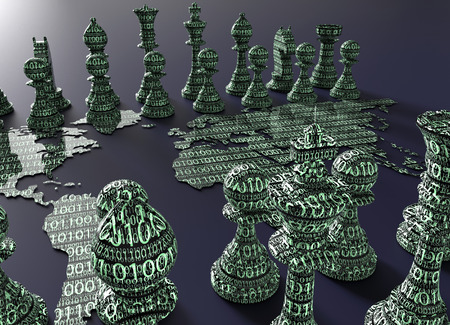
IMAGE: The Light Writer - 123RFWired publica un interesantísimo artículo, "Net states rule the world; we need to recognize their power", muy al hilo de algunos de los temas de los que hablaba Rebecca MacKinnon en su muy recomendable libro "No sin nuestro consentimiento", para cuya edición en español tuve el honor de escribir un epílogo: la alteración que supone en la geopolítica y la economía tradicional la superposición de una red de información global en la que las fronteras tienden progresivamente a perder su sentido, en la que los costes de transacción se reducen al mínimo, y en el que grandes corporaciones como Google, Facebook o Amazon pasan a jugar, con sus decisiones, un papel más importante que el de muchos gobiernos.

Facebook tiene más de dos mil millones de usuarios, y aunque algunos sean falsos, siguen siendo muchos más que los habitantes de China, y todos ellos son afectados por cualquier cambio en las políticas de la compañía. Los usuarios de Google son muy difíciles de calcular, pero simplemente su correo electrónico, Gmail, tiene más de mil millones, y Android, más de dos mil. Se estima que Amazon tenía más de trescientos millones de usuarios activos a principios de 2016, y a finales de 2017 tiene 541,900 empleados, el tamaño de un país pequeño. Cualquiera de estas compañías pueden tomar decisiones, por ejemplo, a nivel fiscal, capaces de generar desequilibrios en las balanzas comerciales de algunas economías. 

¿Qué futuro tiene la geopolítica tradicional, cuando se empieza a apuntar la posibilidad de que las compañías del futuro sean intangibles que tengan una estructura de DAOs, Decentralized Autonomous Organizations, que podrán escoger de manera prácticamente libre en qué régimen fiscal anclarse y cómo contratar con empleados de todo el mundo mediante modelos de gobernanza completamente distribuidossmart contracts? Si quieres, y por relativamente poco dinero, puedes convertirte en un ciudadano e-residente de Estonia, independ ientemente de tu localización y de tu pasaporte, y tener desde un documento nacional de identidad, hasta la posibilidad de constituir sociedades en la república báltica, que presume de ser la sociedad digital más avanzada del mundo.

Ciudadanías virtuales y, por supuesto, monedas virtuales: en 2015, en medio de los momentos más duros de la crisis griega, el país barajó la posibilidad de adoptar el bitcoin como moneda nacional. ¿Qué habría ocurrido si hubiesen sido capaces de llevarlo a cabo, teniendo en cuenta que el precio de la criptodivisa estaba en torno a los $230 entonces pero supera hoy los $7,500, y es tan líquido como para poder tener una tarjeta de débito y dedicarte, si quieres, a pagar en bitcoins en cualquier lugar del mundo? ¿Puede organizarse la economía de un país entero en torno a un concepto que la mayoría de habitantes del mundo aún no entienden y que algunos consideran una estafa piramidal?

Los Panama Papers, los Paradise Papers publicados hoy… todos ellos pruebas evidentes de un sistema que ya no funciona, que pone de manifiesto lo que pasa cuando se combina un caducado sistema de fronteras con la facilidad para mover fondos entre distintos regímenes fiscales, un conocimiento hasta ahora solo al alcance de algunos privilegiados, pero que cada día más, evidencia problemas de falta de transparencia, de responsabilidad social, de ausencia de solidaridad, de un entorno insostenible que se cae a pedazos. Los símbolos de algunos países, sus gobernantes, sus ministros o sus empresarios más señalados, refugiándose en paraísos fiscales para aprovecharse de las debilidades de un sistema imperfecto. Las fronteras, los países y las ciudadanías, convertidos en un concepto ya no solo revisado y revisable, sino cada vez más irrelevante. Traba jadores que escogen su pasaporte y su residencia en función de criterios de todo tipo, y que entregan su trabajo a través de redes globales mediante contratos inteligentes inviolables, y cobrando en criptomonedas. Compañías que se financian emitiendo sus propios tokens y que declaran allá donde escogen declarar mediante procesos de optimización fiscal que se aprovechan de la todavía vigente y obviamente obsoleta legislación existente. Las mayores potencias económicas del mundo tomando un cuerpo de naturaleza completamente diferente, definido no por el lugar donde has nacido, sino por otros factores. Lo que sabíamos de geopolítica y de economía global, convertido en papel mojado.

¿Estamos preparados para iniciar, o simplemente para pensar en iniciar, esta conversación? ¿O se va a desarrollar sin nosotros?


View on the web
Inoreader is a light and fast RSS Reader. Follow us on Twitter and Facebook.